Menu

Mt. Ama Dablam Expedition

28 Days

Mt. Ama Dablam Expedition

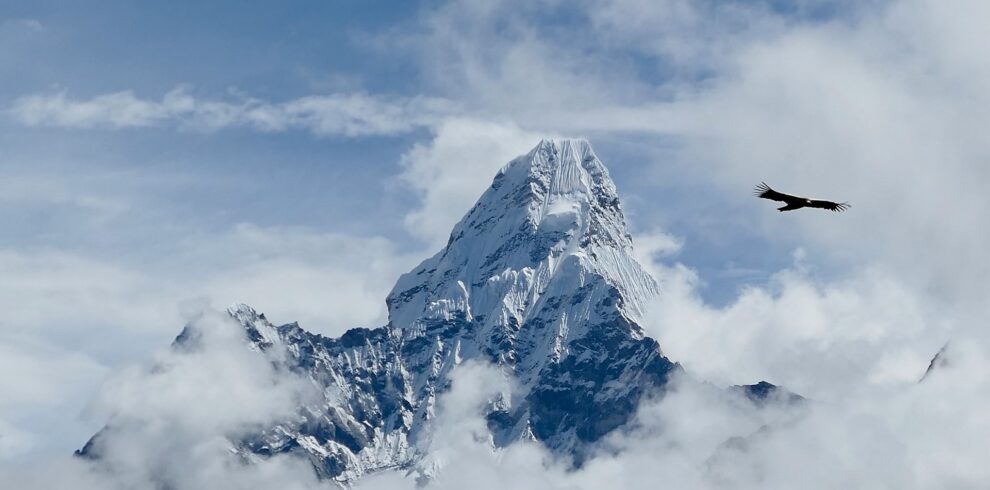
The normal route to climb mount Ama Dablam is from its South- West ridge. Most of the mountaineering beginners start their climbing through this Mount.

Ama Dablam 6812m. Ama Dablam is a small snowcapped peak of 6812m lying in the Everest region. This South – West ridge is the normal and most popular route to ascend the Mt. Ama Dablam

This mountain is considered to be the most technical & difficult to climb. The mountaineers have to cross-difficult ice rocks and steep snow climbing one their climbing route.

Mountaineers usually have to pitch 3 high camps on the mountain of mount Ama Dablam 6812m.

To reach the first camp from base camp, the climbers have to pass the toughest and the difficult passing through the difficult saddle ridges; and then should turn to the north climbing up through the rocky ground and through the boulder.

We are in Camp one now. From Camp I – one has to cross the rocky bowl and should climb the ridge via to the fixed lines to Camp II . From Camp II after crossing over severe rocks and ridge which lead you to a camp 2.

The climbing route from Camp II is mostly with the steep mixed alleyways of rock, ice and snow. The route leads to the slope climb to snow ground and then passes through steep snow and ice tunnel then finally along the snow ridge go to Camp III,

From here to the summit, it is steep climb on snow and ice to the right of a huge hanging glacier. From the Top of mout Ama Dablam very charming sceneries of Mount Everest, Lhotse, Island peak, Makalu , Khumbu Himalayan and rest of the snowcapped surrounded mountains can be envisioned.

  • Difficult
  • Private Car/Bus
  • 6812m
  • Full board
  • 1-10 Pax
  • Expedition
  • Hotel, Lodge, Tea House
  • Kathmandu, Nepal
  • 20
  • 70

Overview

The normal route to climb mount Ama Dablam is from its South- West ridge. Most of the mountaineering beginners start their climbing through this Mount. Ama Dablam 6812m. Ama Dablam is a small snowcapped peak of 6812m lying in the Everest region. This South – West ridge is the normal and most popular route to ascend the Mt. Ama Dablam

This mountain is considered to be the most technical & difficult to climb. The mountaineers have to cross-difficult ice rocks and steep snow climbing one their climbing route.
Mountaineers usually have to pitch 3 high camps on the mountain of mount Ama Dablam 6812m.

To reach the first camp from base camp, the climbers have to pass the toughest and the difficult passing through the difficult saddle ridges; and then should turn to the north climbing up through the rocky ground and through the boulder.

We are in Camp one now. From Camp I – one has to cross the rocky bowl and should climb the ridge via to the fixed lines to Camp II . From Camp II after crossing over severe rocks and ridge which lead you to a camp 2.

The climbing route from Camp II is mostly with the steep mixed alleyways of rock, ice and snow. The route leads to the slope climb to snow ground and then passes through steep snow and ice tunnel then finally along the snow ridge go to Camp III,

From here to the summit, it is steep climb on snow and ice to the right of a huge hanging glacier. From the Top of mout Ama Dablam very charming sceneries of Mount Everest, Lhotse, Island peak, Makalu , Khumbu Himalayan and rest of the snowcapped surrounded mountains can be envisioned.

Information for Lobuche peak

Lobuche East Peak, at an elevation of 6119 meters, is an exciting and challenging way to upgrade your Classic Everest Base Camp Trekking with a beautiful climb in the center of the Khumbu Valley of Nepal. Though less relatively as high as Island Peak (6189m), Lobuche East Peak Climbing is technically more challenging. Lobuche Peak is a genuine 6000m mountaineering experience requiring basic knowledge of rock and ice climbing techniques at high altitudes.

Lobuche East is a favourite because of the exceptional panorama seen from the summit: Lhotse, Nuptse, Pumori, Lobuche, Ama Dablam, Makalu and notably, a fantastic view of Mount Everest, which is not visible from Island Peak. Lobuche consists of several small summits, but ‘Lobuche Peak’ refers to Lobuche East rather than Lobuche West, a different and more difficult peak. The popular route to Lobuche East is from the south ridge. Our Lobuche East Peak Climbing starts with the Everest Base Camp Trekking, which in itself is a splendid trekking trail through beautiful forests, Sherpa villages and monasteries with endless great views of the Khumbu Mountains. Proper acclimatization is essential for Lobuche East Peak Climbing and trekking the Everest Base Camp. Kala Patthar first provides the perfect preparation for a carefully paced climb of Lobuche East Peak.

After reaching Everest Base Camp and the famous Kala Patthar, from where we enjoy the fantastic view of Everest, Lhotse, Nuptse, Pumori and other mountains, we return to Lobuche village, the trailhead for Lobuche Peak Climb. The trail up the valley from Lobuche becomes increasingly steep and rocky as we near the Lobuche Base Camp, 4950m. From Base Camp, we clamour over steep stone terraces and snowy slopes using fixed ropes to reach the ridge along the southwest face where we set up High Camp, 5600m. We get superb views of Amadablam, Cholaste, Thamserku, Kantega Peak and Tawache Peak on the way.

To reach the summit from High Camp, we cross over steep stone slabs, which may be covered with ice and snow. We must ascend 50m on a 45-degree snow wall to reach the proper summit ridge. We use fixed ropes. The sharp snowy ridge to the first summit is exposed. There is a descent which you may need to rappel down before the final sharp ascent to the summit. We acknowledge an incredible view of some of the most splendid mountains on earth from the summit.

The best season for Lobuche East Peak Climbing is from March to May (Spring) and September to November (Autumn). However, the winter is also a great time to climb if you are well prepared for the cold weather. In the crisp and cold month of December, the views of the mountains are crystal clear, and there are fewer tourists around. The duration of the Lobuche East Peak Climbing can be lengthened or shortened according to your preference. Trek With Domi will arrange every detail of your Lobuche East Expedition; lodge accommodation, guides, food, and all the necessary climbing and camping equipment.


Lobuche Peak – Ama Dablam 6,812m. Expedition

Itinerary 

Day 01:Arrival Kathmandu
Day 02:Kathmandu
Day 03:Prepared Expedition & Briefing in Ministry of Tourism
Day 04:Lukla and trek to Phakding
Day 05:Namche Bazaar
Day 06:Namche -Acclimatization
Day 07:Namche -Thyanboche Monastery
Day 08:Thyanboche to Dingboche 4410m.
Day 09:Dingboche Acclimatization
Day 10:Lobuche 4910m
Day 11:Lobuche High Camp 5400m

Day 12: Summit Lobuche Peak and back down to Dhukla or Dingboche

Day 13: Trek to Ama Dablam BC

Day 14/22:Climbing period for Ama Dablam 6812m.
Day 23:Base camp – Namche
Day 24:Namche – Lukla
Day 25:Fly Lukla – Kathmandu & transfer to hotel

Day 26: Extra Day if bad weather at Khumbu.
Day 27:Kathmandu
Day 28:Final Departure
Itinerary (Spring and Autumn)

Arrival at the Tribhuwan International Airport (TIA) in Kathmandu, we will be greeted by a representative from Trek with Domi Pvt. Ltd. will take you hotel. Hotel Overnight.

Day 2 :
Kathmandu

Today we also get to know our climbing leader as well as fellow climbers. The climbing leader will check our equipment(s) to make sure for one last time to get us ready for our adventure. This step will also ensure that if any equipment is found faulty we have the rest of the day to fix it or find equipment that works. After checking in the evening there will be a welcome dinner in a Nepali Restaurant where we will be able to enjoy authentic Nepali cuisine. Hotel Overnight

Prepared Expedition & Briefing in Ministry of Tourism

Early morning at 2 o’clock, we will drive to the Manthali airport for flying Lukla. Four hours’ drive from Kathmandu because of during October and November is very busy at ktm airport that’s why civil aviation move to Manthali airport. After a great 25 minute scenic flight, after a flying above the breathtaking green and white mountains, we reach Tenzing-Hillary Airport at Lukla. This is one of the most beautiful air routes in the world culminating in a landing on a hillside surrounded by high mountains. Upon our arrival at Lukla, we meet our other crew members and after some packing and arrangements, we start our trek through the prosperous village of Lukla until we reach Phakding. To assist in acclimatization, we only have a short hike today. However, if interested in additional activities, we can take a side trip to a nearby monastery. Lodge Overnight.

After breakfast we walk through beautiful pine forests and then along Dudh Koshi River ending our nature-filled journey at Namche Bazaar. After walking for almost over an hour, we come across the glistening Mt. Thamserku (6,608m) on our right and also experience the serenity of pine, fir and juniper forests throughout our journey. If the weather is clear, we may even catch a glimpse of Mt. Everest peering over the Lhotse-Nuptse ridge. We continue walking until we reach the entrance to Sagarmatha National Park, Namche Bazaar, the gateway to Mt. Everest and main trading centre of this region. This day we cross five suspension bridges, the last one also known as the Hillary Bridge being the highest. It is an uphill walk from Hillary Bridge to Namche Bazaar. Lodge Overnight.

This is the day set aside for acclimatization. Health experts recommend that we stay active and move around even during the rest day instead of being idle. There are a few options set aside for this day. We can either stroll around Namche’s quaint villages or come in contact with the Sherpa people and their rich culture, or we can hike up to the Everest View Hotel and enjoy an up-close view of the mighty Everest. While in the Namche village or upon returning from the hike to the Everest View Hotel, trekkers may also visit the local museum containing exhibits displaying the area’s native flora and fauna as well as the history of the Mount Everest region.
For trekkers who want to hike for a little longer, a hike to Khumjung village (5-6 hours) may also be an option. While in the village we can visit the Edmund Hillary School and Khumjung Monastery (a monastery famous for housing the head of the Yeti!). Lodge Overnight.

After breakfast, we trek towards Tengboche. It is an easy walk from Namche to Phunki. Upon reaching Phunki, we ascend towards Tengboche, a village that houses the very famous Tengboche monastery which is the largest monastery of the Everest region. Located amidst the Sagarmatha National Park (a UNESCO World Heritage Site of "outstanding universal value”), it is draped with the panoramic 360-degree view of the Himalayas, including Mt. Everest, Nuptse, Lhotse, Ama Dablam and Thamserku. The monastery opens at 3:pm so we reach there by three. And, if we are lucky we might just be able to witness a religious ceremony. Lodge Overnight.

With the Himalayas as its backdrop, the monastery in Tengboche is in an excellent location. We visit the monastery in the morning, Take bless from lama and enjoy taking pictures of the monastery and the amazing landscape. We descend for about half an hour through a forest before crossing a river. Next, we trek uphill and notice that as we climb higher, the landscape becomes drier. We walk past a traditional Sherpa village of Pangboche. Upper Pangboche there is old monastery normally expedition members are visit there taking the blessing from lama for expedition safe & success. Before reaching Dingboche, a beautiful village located on a imaja riverside. Here, we will also see a small helipad that is used for helicopter rescues during emergencies. Lodge Overnight.

This is the day set aside for acclimatization because we gain 1000m from last acclimatization place Namche Bazaar. Health experts recommend that we stay active and move around even during the rest day instead of being idle. There one beautiful peak Nagajuna 5200m local name that is great option to acclimatization. Lodge Overnight.

After breakfast, we start with an easy walk towards Dugla. Next, we trek up the steep terminal moraine of the Khumbu Glacier, and then pass through the boulder-strewn slopes as we ascend Chupki Lhara where we find an array of stones with prayer flags used as memorials to Scott Fischer (American mountaineer) and 10-time Everest summitter Babu Chiri Sherpa (Nepalese mountain guide) who perished on a mission to climb Everest. The trail then continues to the Khumbu Glacier moraine and we find ourselves facing several great peaks - Khumbutse, Lingtren, Pumori and Mahalangur Himal. Lodge Overnight.

From Lobuche, we trek towards Lobuche base camp. After walking some distance on relatively flatter plane, the path to the Lobuche Base Camp gets steeper and rocky. We move forward along the Lobuche Glacier while enjoying great views of Ama Dablam, Cholatse, Pokalde, Thamserku, Kantega and other Himalayas. From the base camp, we continue on a rocky moraine path to reach the High Camp. After reaching there, we set up our camp, take lunch and rest. For the climb, we usually will be climbing on rock surface for up to around 5770m. After that, we climb on ice and use ropes when necessary. However, the use of the rope and the length depends upon the season and the crevasses.
Fixed rope is used most of the times whereas man rope is used when required. The climbing leaders will decide what is best for when.
Pre-Climb Training: Our guides will provide training on peak climbing techniques and the proper ways of using climbing gears such as the ice axe, climbing boots and crampons, harness, ascender, etc. The training will also include using ropes to go up and down. We strongly believe that the training experience will boost your confidence and climbing skills to increase the chances of scaling the summit as well as to fully enjoy the experience. Tent Overnight.

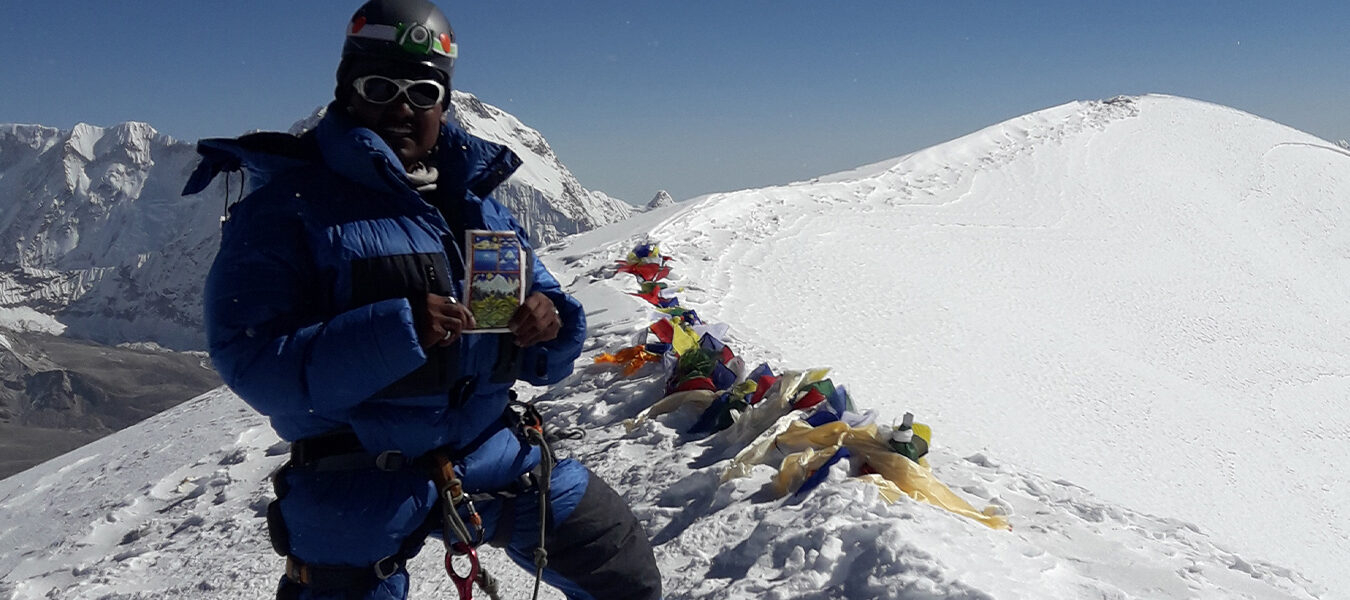
We wake up early today at around 12 to 1 am and have our breakfast before beginning our climb. It is important we reach the summit before noon because in the afternoon the strong winds in the high lands might become a barrier for a successful summit. We will most likely be walking on rock surface up to around 5700m after which we climb on ice. We use both fixed rope and man rope as per our leader’s instruction. The climbing surface as well as the length of the rope and depends on the time of the season and the crevasses. Lobuche East offers more panoramic views of the mountains than any other trekking peak. From the summit, you get to enjoy magnificent views of Everest, Lhotse, Nuptse, Ama Dablam, Cholatse, Pumori, and many more. We spend some time at the summit celebrating and taking pictures, then we get back to the High Camp again for an overnight or down to Dukla lodge. Tent or Lodge Overnight.

We begin by trekking back to Pangboche and crossing the Dudh Koshi River. Next, we ascend on a trail which will take us to the Ama Dablam Base Camp. The Base Camp is a large open grassy area where we will be spending the rest of the day for acclimatization. Overnight at Ama Dablam Base Camp. Tent Overnight.

From the Ama Dablam Base Camp we move further up to Camp 1 at 5,700m (17,400 ft) along the standard route. Generally, one night is spent at Camp1for acclimatization and before returning to the Base Camp for the final preparation to scale the summit. There are three camps above the base camp before reaching the summit.
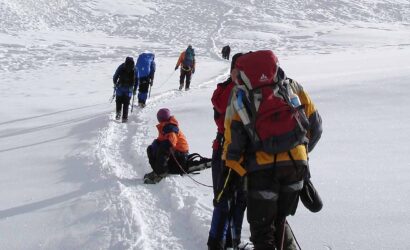
The ascent from Base Camp to Camp1 is technically challenging. From Camp 1, we follow existing fixed lines and then establish new ropes wherever necessary both for ascent and descent. The climb from Camp 2 at 6110m to Camp 3 6200m is comprised of mixed rock, snow and ice, which is loose in certain places. The climb from Camp 3 to the summit is relatively less technical. After summiting the peak, we return back to the base camp. Tent overnight.

Today’s walk will be a much easier as we descend to the lower altitudes. Following the same route back through the wide valley of Khumbu Khola, we pass through the beautiful Sherpa villages Pangboche. Pangboche is a scenic village surrounded by Everest to its north, Amadablam, Thamserku, and Kangtaiga to the east, the Kongde range . From Tengboche, we continue through the hillside blanketed by rhododendron and juniper trees. After crossing the bridge over the Dudh Koshi River, our trail follows the Dudh Koshi gorge descending rapidly through the pine forests before reaching Sansa. We keep a lookout for wildlife such as mountain goats, colorful pheasants, etc., while passing through the forest. After passing a chorten, we reach the army camp at Namche Bazaar. Lodge Overnight

The trail descends steeply downward so we need to walk cautiously as our shaky legs continuously battle the rocky terrain. After crossing the suspension bridges over the fast flowing Dudh Koshi and its tributaries, the trail becomes more level and natural. After our arrival in Lukla, we stretch those sore legs and recall the experiences of the last couple of weeks. Lodge Overnigh

We catch an early morning flight to Kathmandu after our long mountain journey. After reaching Kathmandu, we can take a rest or do some souvenir shopping. If we want to explore any other areas of Kathmandu, we may do that today. Our guides can help you with both souvenirs shopping or sightseeing. There will be a farewell dinner in the evening to celebrate the climbers’ successful summit of the Island peak. Hotel Overnight.

Extra day for if bad weather at khumbu.

Free Day Kathmandu.

Departure Home.

Cost Details'

Cost Included

  • Lobuche & Ama Dablam Climbing Permit
  • Sagarmatha National park permit & TIMS permit fee
  • Per member one Sherpa climbing guide.
  • Liaison Officer fee (controlling officer from Government)
  • Ktm-Lukla-Ktm air flight. (or Manthali Lukla Manthali with vehicle service form and to ktm)
  • Guide & Staff insurance (Kitchen staff and porters)
  • Allowance for all staffs including guide summit bonus.
  • Trekking and Expedition (Lunch & Dinner: one main curse & soup with tea, coffee. For Breakfast: one set with tea & Coffee)
  • Provide high food for Amadablam Expedition & UP gas with cooker.
  • Airport Transfer in Kathmandu
  • Four nights in four stars Hotel in Kathmandu on BB plan (Bed and Breakfast)
  • Single Tent or Room at Amadablam base camp and share tent at above Amadablam camp & Lobuche peak.
  • Kitchen Staffs at Amadablm Base camp.
  • Porter to BC & back.
  • Provide normal weather report & Local mobile if emergency use.
  • Solar panel battery charger at Amadablm Base Camp.
  • All climbing gear for expedition.(fixed rope, ice screw, rock pitons and others needed for climbing)
  • Excess baggage charges (if you have more than 15 kg luggage, cargo charge is around $1.5 per kg)

Cost Excluded

  • International airfare to and from Kathmandu.
  • Personal clothing and climbing gear.
  • Personal Travel & climbing Insurance.
  • Nepal Visa fee.
  • Helicopter Rescue if needed.
  • Extra night accommodation in Kathmandu because of early arrival, late departure, early return from mountain (due to any reason) than the scheduled itinerary.
  • Alcoholic & cold drinks
  • Personal expenses (phone calls, laundry, bar bills, battery recharge, extra porters, bottled water, shower, heater, etc.)
  • Tips to Staffs if you like.
  • Summit bonus $700 if summited or if cross last camp.

Write a Review

Your email address will not be published. Required fields are marked *

Expedition Checklist

Climbing Gear:
1. Ice Axe:  A 60 cm length is probably the most useful length. Bring a light weight axe with a pick that will stick easily in hard glacier ice. Attach a light weight wrist leash that is usable for climbing steeper terrain. The summit day is a consistent 40 degrees, so a shorter axe is necessary.
2.  12 point Crampons:  These must be sharp and must fit your boot perfectly.
3. Climbing Harness:  Make sure the buckle is easy for you to thread in cold conditions! Gear loops will be useful for this trip as well as adjustable leg loops.
4. Climbing Helmet:  Required. Be sure you can comfortably fit a warm hat underneath.

  1. Hardware: Bring 3 locking and 4 lightweight regular carabiners. It is helpful if at least one of the locking carabiners has a “key gate”, like the Petzl Attache. Bring two handled ascender for ascending the fixed rope. You will need rigging material–two sewn 48″ nylon slings and 10′ of 8 mm perlon should be sufficient. Also include one small 5 mm prussik loop (about 4 feet of cord tied with a double fisherman’s knot) for a rappel backup. For rappelling the Black Diamond ATC Guide is good since it can handle ropes from 7.7mm to 11mm. A Figure 8 is an old standby and works on a variety of ropes and also icy ropes. While it twists the ropes more, it is quite foolproof. You might consider both, in case you drop one of them and lose it.


Backpack & Sleeping Bag:
Climbing Backpack: Medium size internal frame pack (60 liter capacity). Look for a pack which is comfortable to carry, very durable, as light as is reasonable and one which has a minimum number of bells and whistles.

Sleeping Bag: Bring a sleeping bag comfortable to -20. Down is lighter and much more compressible. Be sure to bring a compression stuff sack. Keep in mind that many of your nights will be much warmer than -20, especially on the trek in to base camp.

Sleeping Pads: Bring one RidgeRest or Thermarest pad. A stuff sack helps prevent punctures.


Camp Accessories:
1. Headlamp: Bring a good LED headlamp with 2 sets of lithium batteries for cold conditions.
2. Water Bottles: 2 wide mouth plastic water bottles with insulated covers. A small Thermos bottle is great for cold mornings. Bring a pee bottle too.
3. Water Treatment: Iodine tablets (Potable Aqua or similar) or iodine crystals (Polar Pure). One bottle of Potable Aqua (enough to treat 25 liters) should be more than sufficient.

  1. Utensils: Bring an insulated mug with a lid, a decent sized bowl, spoon, pocket knife and lighter. You are better to bring lighters from the US. TSA says you can carry them on, or pack two in a DOT approved case. Kathmandu lighters are not very good.

Footwear:
1. Double Climbing Boots with expedition liners. Make sure your crampons can be adjusted to fit them! The newer insulated boots like the Scarpa Phantom 6000, or the La Sportiva Spantik, are ideal for the climb–they climb well enough on the rock sections to Camp 2 and are warm enough for up high

  1. Approach boots. A good example is the La Sportiva Trango S, which will work on the trek and approach to Camp 1, and even up to Camp 2 if conditions warrant.
  2. Gaiters and Yaktrax or Kahtoola Microspikes in case of snow.
  3. Socks: Four sets of climbing socks.


Clothing:
1. Insulated Parka: Heavyweight insulated expedition parka with hood.
2. Shell Jacket: Lightweight waterproof-breathable construction with a hood

  1. Pants: Lightweight waterproof-breathable shell pants
    and others clothing are same as peak climbing
From $9,800 $9,800
/ Adult
  • Best Price Guaranteed
  • No Booking Fees
  • Professional Local Guide

  • Nepal
    • Annapurna Region
    • Dolpo Region
    • Everest Region
    • Langtang Region
    • Lower Everest Trek
    • Manaslu Region
  • Expedition
  • Peak Climbing
  • Trekking